

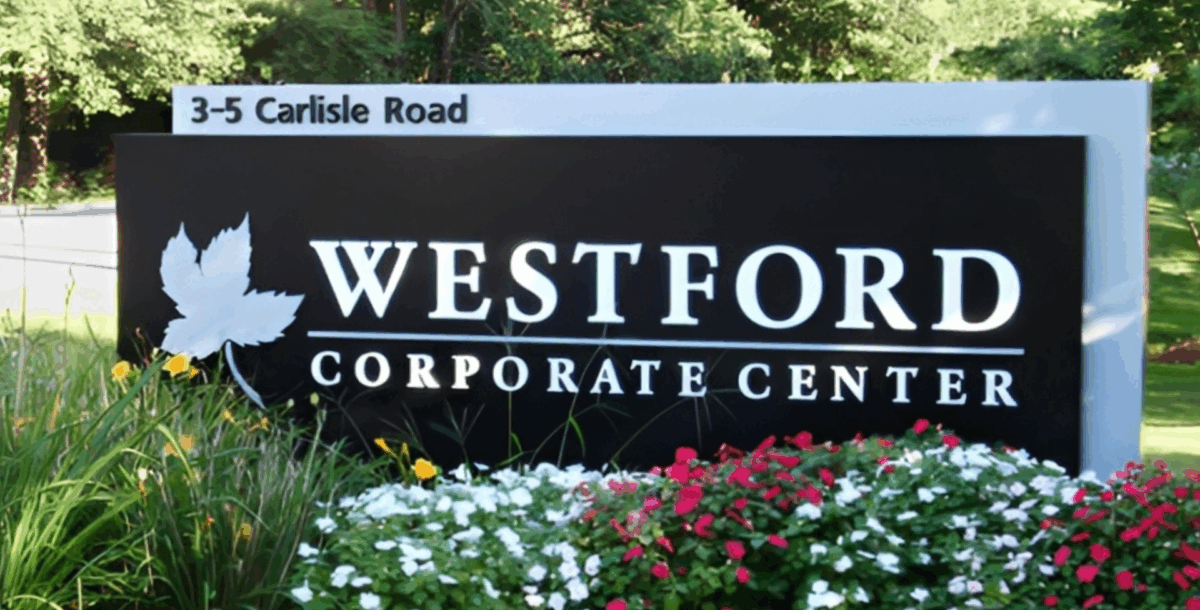
Monument signs are often the first physical interaction people have with a commercial property, and first impressions happen fast. Because people make decisions in seconds, today’s monument sign design trends focus less on decoration and more on clarity, durability, and long-term value.
This guide breaks down what’s changing, what’s working, and what your team should consider before committing to a monument sign. From modern materials and visibility standards to compliance and site planning, you’ll find practical insights designed to help you make smarter signage decisions, because the right sign doesn’t just look good, it performs.
Why Monument Signs Still Matter in Commercial Real Estate
Monument signs do more than mark an address; they set expectations before anyone ever reaches the building. Long before visitors step inside, the monument sign tells them where they are, who the property serves, and whether they’re in the right place.
Recent studies highlighted by Commercial Construction & Renovation Magazine show that signage designed to capture attention can significantly influence behavior, increasing dwell time by more than 20% and driving measurable improvements in engagement and traffic flow.
In commercial real estate, monument signs play a practical role in tenant visibility, wayfinding, and overall brand perception. They help drivers and pedestrians orient themselves quickly, reduce hesitation, and create a sense of order on the street.
Think of a first-time visitor pulling into a shared development with offices, retail, and parking spread across the site. A clear monument sign immediately tells them where to turn, which tenants are on-site, and where they belong.
In other words, if you make your property easy to find for pedestrians, it will feel more credible, lease more efficiently, and attract more consistent foot traffic. When people don’t have to work to understand where they’re going, they’re more likely to arrive with confidence and stay longer once they do.
Design Trends Shaping Modern Monument Signs
Today’s monument sign trends are shaped by how your visitors actually move through a site and how your property needs to perform from the street, not just how it looks in a rendering. If your sign can’t be understood quickly in real conditions, it’s not doing its job.
You’ll see these design trends showing up most often in modern monument signage because they solve real problems:
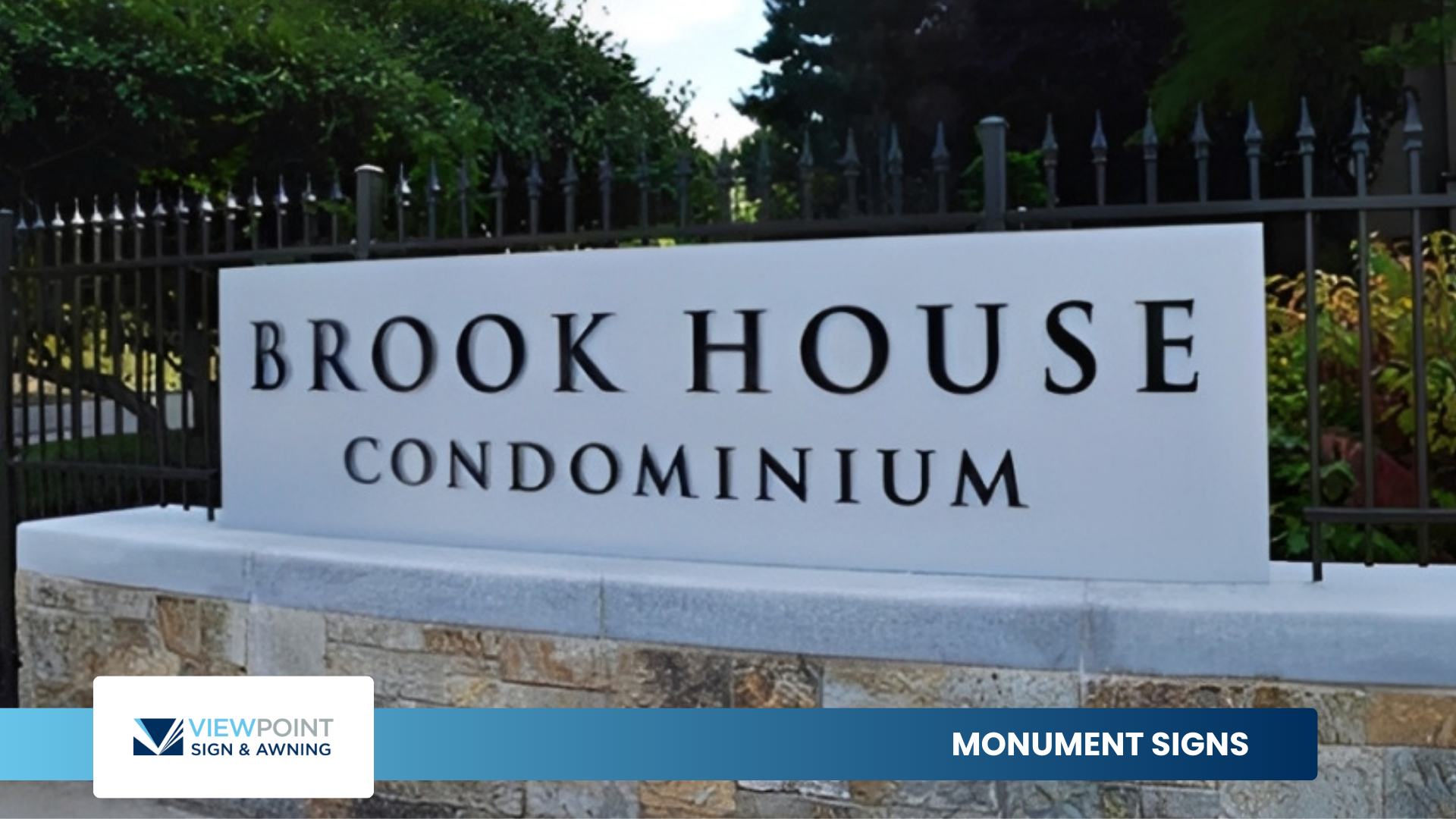
- Clean, minimal typography that helps people read and recognize your property at a glance
- Mixed materials, like stone paired with metal or concrete paired with acrylic, that balance durability with a polished look
- Integrated lighting that improves nighttime visibility without glare or light spill
- Modular panel systems that let you update tenant names without replacing the entire sign
- Lower-profile designs that stay visible while meeting zoning and height restrictions
None of these trends exists in isolation. Together, they help you create monument signs that are easier to read, easier to update, and better suited to real-world use—especially if you manage a multi-tenant or mixed-use property.
Design Trends Shaping Modern Monument Signs
Across commercial real estate, you’re likely seeing a shift toward durable, low-maintenance materials, not because they’re trendy, but because they hold up better over time. Materials like stone, concrete, aluminum, and steel are replacing cheaper composites that fade, crack, or require frequent touch-ups, saving you from ongoing maintenance headaches.
When people make decisions about where to go, quality and clarity matter—not just up front, but over the life of the sign. In fact, a national study found that 60% of businesses that repaired their signage saw an average sales increase of about 10%, reinforcing why materials and finishes that help your signage keep working for you year after year.
Weather resistance has also become a baseline expectation. In a climate like Boston’s, where freeze-thaw cycles, road salt, wind, and moisture are constant factors, your monument sign needs to perform year-round. A sign that looks great at installation but deteriorates after a few winters quickly becomes a liability, both visually and financially.
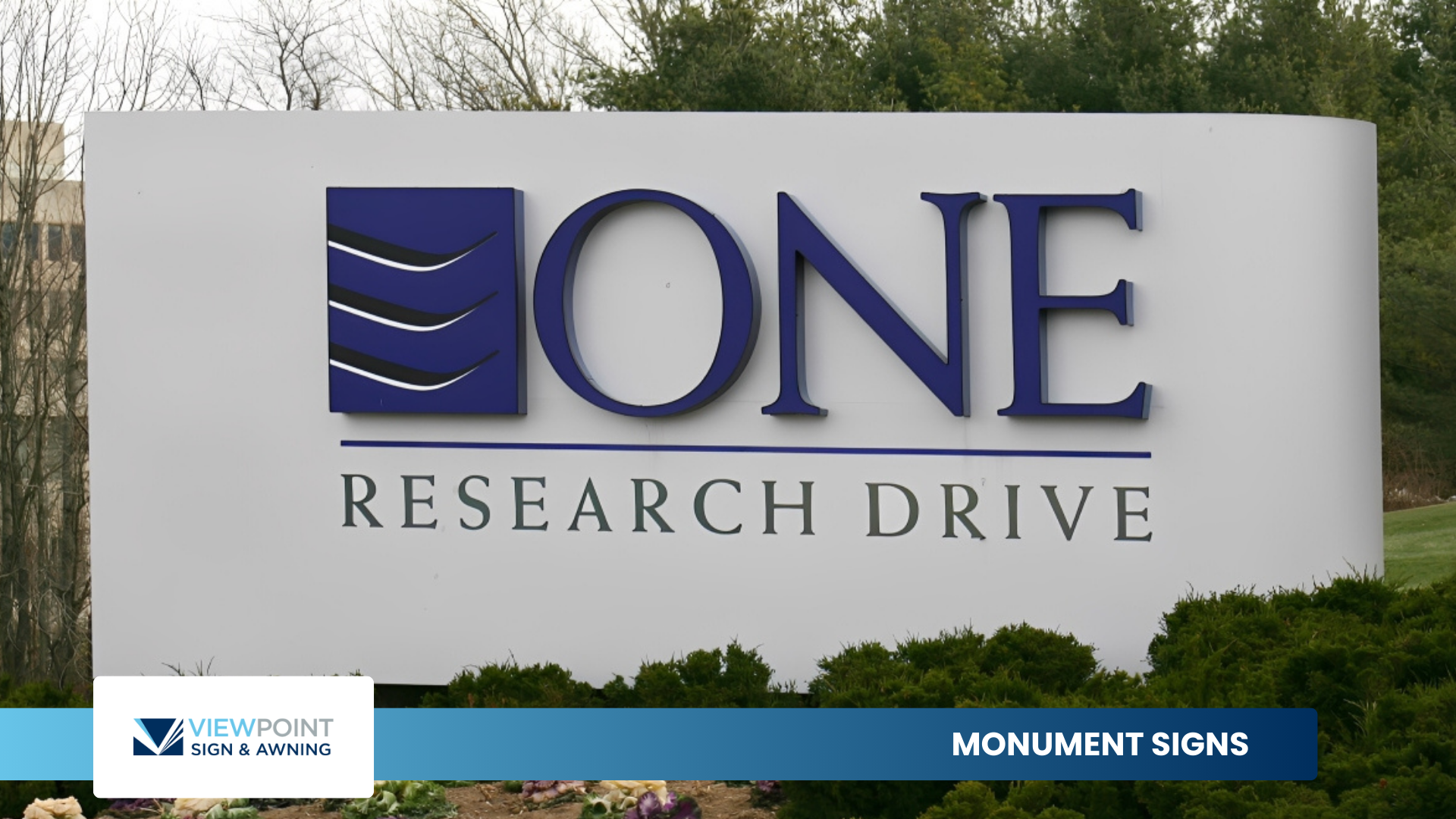
If you manage a multi-tenant or mixed-use property, flexibility matters just as much as strength. Neutral palettes—stone or concrete bases, muted metals, and clean, restrained typography—make it easier for you to update tenant names without starting over. Instead of repainting or replacing entire signs when branding changes, you can swap panels while the core structure stays intact, saving time and replacement costs.
Materials matter just as much as color. Durable options like aluminum, steel, masonry, and high-quality composites resist fading, cracking, and corrosion, which means fewer repairs and a monument sign that still looks intentional years after installation.
Finishes should also be chosen with approvals in mind. If your property falls under zoning review or historic oversight, materials that complement the surrounding architecture tend to move through review more smoothly. Subtle, context-aware finishes often lead to fewer revision requests, faster approvals, and less back-and-forth with reviewers.
Visibility, Wayfinding, and the “5-Second Rule.”
When someone approaches your site, they aren’t studying signs necessarily, but they will notice if your sign tries to say too much, uses low contrast, or blends into the background. People hesitate, miss the entrance, or assume they’re in the wrong place. That hesitation costs you attention, and sometimes the visit entirely.
Fortunately, you can change that by applying the 5-second rule to your monument signs. The 5-second rule is simple: you have just a few seconds to signal to someone that they’re in the right place. Your monument sign usually gets one quick glance from a driver or pedestrian.
Here’s how this rule affects your property in real life:
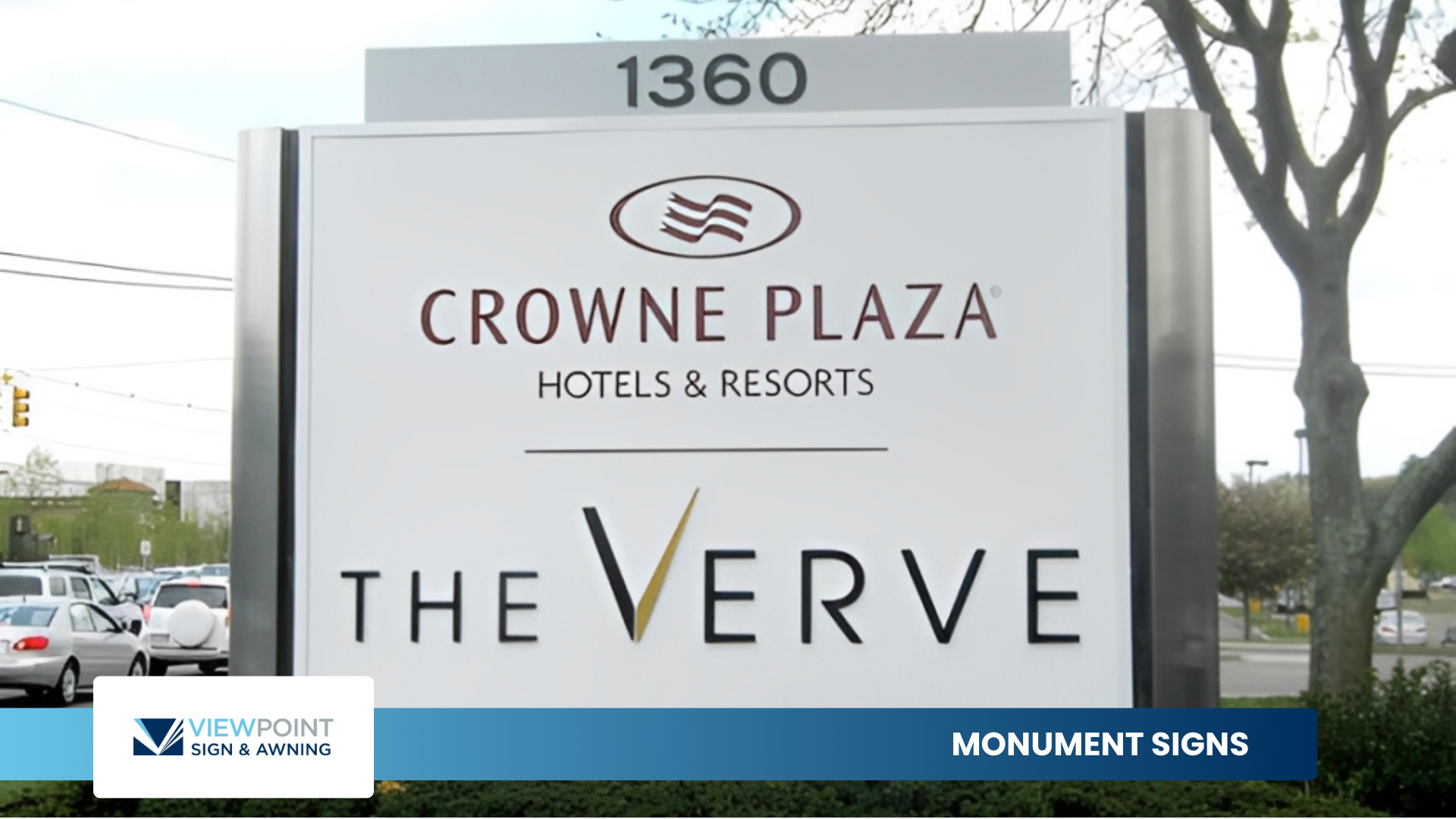
- People scan, they don’t read. If your sign requires effort, it’s already failing.
- Size alone isn’t enough. You get visibility because of the right balance of size, contrast, and placement, not because the sign is bigger or busier.
- Too much design creates friction. Over-designed signs often perform worse because they ask people to process too much information too quickly.
- Wayfinding starts at the street. Your monument sign should orient visitors before they enter the site, not after they’re already searching for the front door.
When your monument signage follows the 5-second rule, it works because it removes friction. Visitors hesitate less, traffic flows more smoothly, and your property feels easier to navigate—before anyone even parks their car.
When to Involve a Sign Professional in Monument Sign Design
Most teams start looking for monument sign guidance when something feels off—visibility is limited, approvals are getting complicated, or the site doesn’t behave the way the plans suggested it would. That’s usually the signal that it’s time to bring in a sign professional.
The reality is, monument sign design works best when you address it during site planning, not after construction is already underway. This is where teams like Metro Sign help you the most: evaluating real sightlines, traffic patterns, setbacks, and zoning constraints before decisions are locked in. That early input helps you avoid signs that technically comply but fail to perform once they’re installed.
Professional support becomes especially valuable for you when your property serves multiple tenants, when visibility is limited by road speed or site layout, or when zoning or historic review adds extra layers of approval. In these situations, small design and placement decisions can have a big impact on whether your sign is easy to find, easy to approve, and easy to maintain.
Good design trends only work because someone knows how to execute them locally. Understanding how rules are applied, where visibility is gained or lost, and what actually gets approved is where experienced sign professionals make the biggest difference for your project.
Planning a Monument Sign for Your Property?
If you’re developing, renovating, or managing a commercial property, monument signage is one of the most visible long-term decisions you’ll make. A local, full-service team can help you apply current design trends while navigating zoning, permitting, and installation with fewer surprises.