

For commercial properties, the first impression often happens from the road—not at the front door.
Before visitors park, enter, or interact with a tenant, they rely on signage to understand where they are and whether they’re in the right place. That’s where monument signs and pylon signs play a critical role.
For commercial properties across the Boston area, these signs do more than identify a location. They shape visibility, guide traffic, support tenant branding, and influence how a property is perceived from the street.
If you’re planning a new development, updating an existing property, or replacing outdated signage, here’s what you should consider when designing a monument or pylon sign that actually performs.
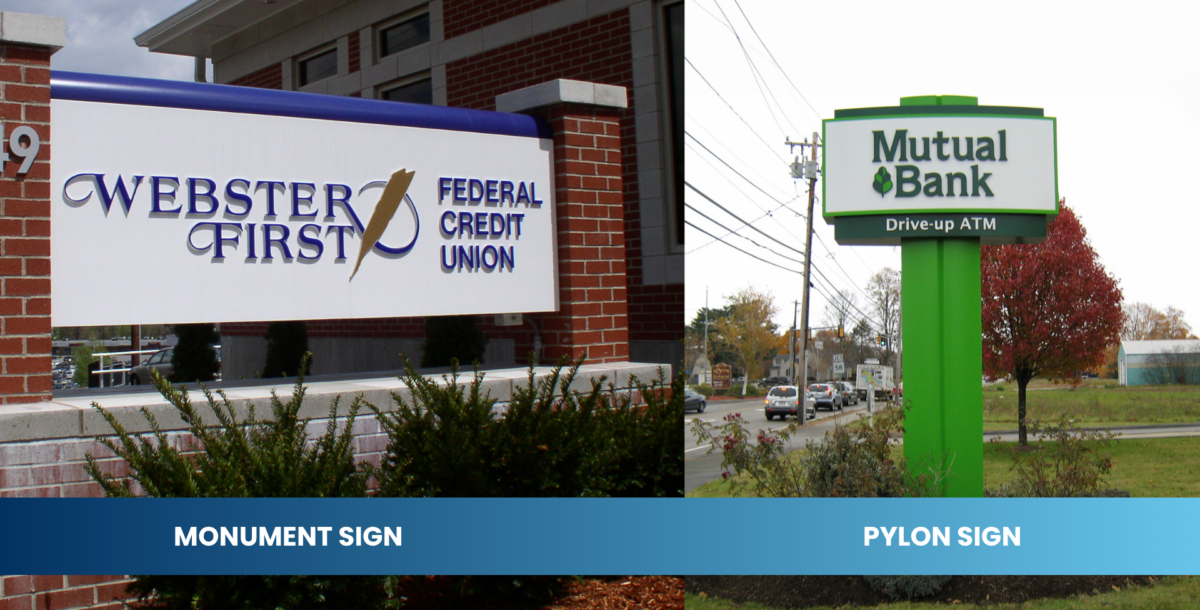
Monument Signs vs. Pylon Signs: What’s the Difference?
While both serve similar purposes, monument signs and pylon signs are used in different contexts.
Monument Signs
- Ground-level structures
- Typically placed at entrances
- Designed for pedestrian and low-speed traffic visibility
- Common in office parks, healthcare campuses, and residential developments
Pylon Signs
- Elevated, freestanding structures
- Designed for long-distance visibility
- Ideal for high-traffic roads and commercial corridors
- Common in retail centers, gas stations, and multi-tenant plazas
Choosing between the two depends on your site layout, traffic patterns, and visibility needs—not just aesthetics.
Why Good Sign Design Matters for Commercial Properties
A well-designed sign does more than look polished—it removes friction.
When signage is unclear, poorly placed, or difficult to read, visitors hesitate. They miss entrances, circle the property, or assume they’re in the wrong location. That hesitation can impact tenant traffic, customer experience, and overall perception of the property.
On the other hand, effective monument and pylon signage:
- Improves wayfinding from the street
- Increases tenant visibility
- Enhances perceived property value
- Creates a more organized and professional environment
Key Design Principles for Monument and Pylon Signs
1. Prioritize Visibility First
Your sign should be readable within seconds.
Drivers and pedestrians don’t study signage—they scan it. That means:
- High contrast between text and background
- Clean, legible typography
- Proper sizing based on viewing distance
- Strategic placement aligned with traffic flow
If your sign takes effort to read, it’s already underperforming.
2. Design for the Environment, Not Just the Brand
A sign doesn’t exist in isolation—it lives within a physical environment.
Consider:
- Road speed and traffic patterns
- Sightlines from different directions
- Landscaping, lighting, and surrounding structures
- Seasonal changes (snow, foliage, lighting conditions)
A design that looks great in a mockup may fail if it doesn’t account for real-world conditions.
3. Balance Aesthetics with Durability
Materials matter just as much as design.
In Boston’s climate, signage must withstand:
- Freeze-thaw cycles
- Moisture and snow accumulation
- Wind exposure
- UV wear over time
Common durable materials include:
- Aluminum and steel
- Stone or masonry bases
- High-performance composites
- Weather-resistant finishes
The goal isn’t just to install a sign—it’s to avoid constant maintenance and premature replacement.
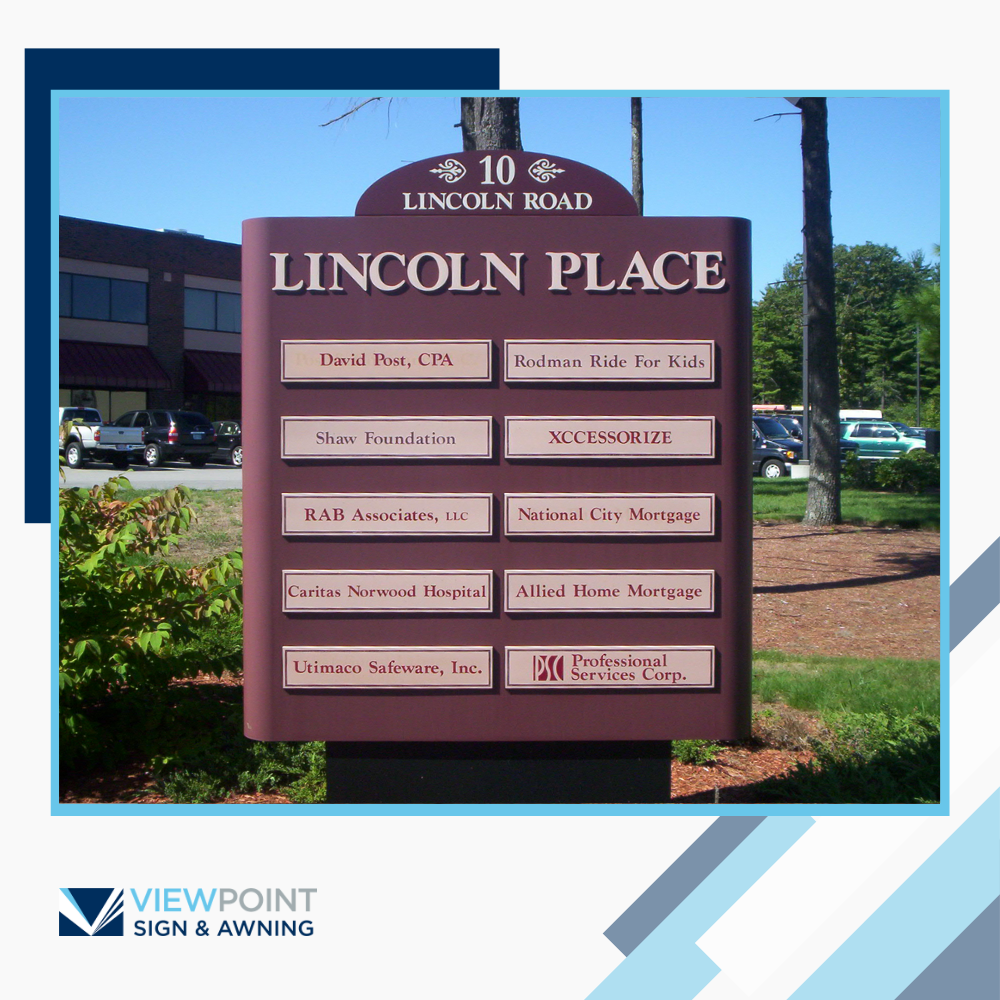
4. Plan for Multi-Tenant Flexibility
If your property includes multiple tenants, flexibility is critical.
Design strategies include:
- Modular panel systems
- Neutral base materials
- Replaceable tenant panels
- Consistent layout structures
This allows you to update tenant names without replacing the entire sign—saving both time and cost.
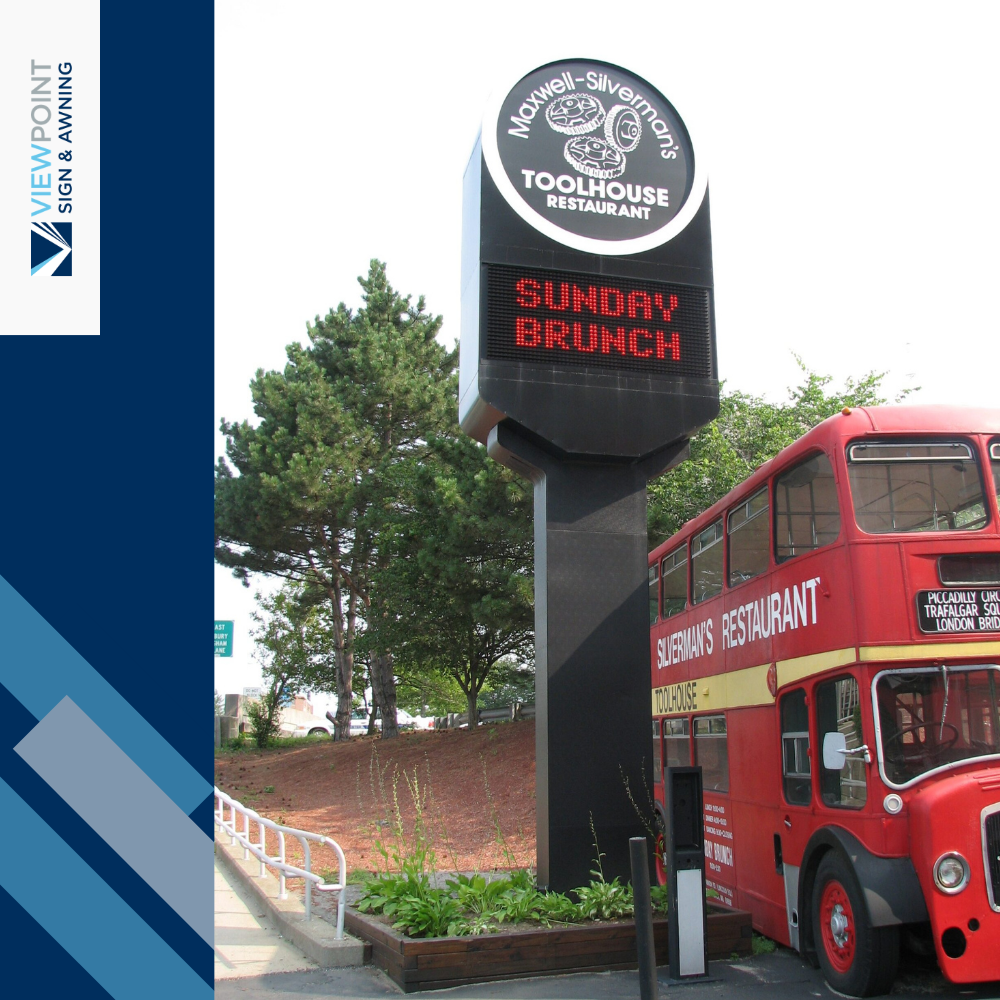
5. Integrate Lighting Thoughtfully
Lighting plays a major role in visibility and safety.
Options include:
- Internal illumination
- External spot or halo lighting
- Backlit panels
- Energy-efficient LED systems
Well-designed lighting ensures your sign performs just as effectively at night as it does during the day—without glare or light spill.
6. Design with Permitting in Mind
Sign design is not just a creative process—it’s a regulatory one.
Local considerations may include:
- Height restrictions
- Setback requirements
- Zoning limitations
- Historic district approvals
- Sign area and illumination rules
Design decisions that align with local guidelines early on can significantly reduce delays and revisions.
When to Use a Monument Sign vs. a Pylon Sign
Choosing the right sign type depends on how your property needs to function.
Use a Monument Sign when:
- Traffic speeds are lower
- The property entrance needs clear definition
- You want a more architectural, integrated look
- Pedestrian visibility is important
Use a Pylon Sign when:
- Your property sits on a high-speed roadway
- Long-distance visibility is critical
- You need to display multiple tenants
- The site has limited frontage visibility
In some cases, properties benefit from using both—combining a pylon for visibility and a monument sign for entry-level wayfinding.
When to Involve a Sign Partner in the Design Process
Most signage issues don’t come from poor design—they come from late involvement.
Bringing in a signage partner early helps you:
- Evaluate real-world visibility
- Navigate zoning and permitting requirements
- Align design with site constraints
- Avoid costly redesigns or delays
This is especially important for:
- Multi-tenant developments
- Complex site layouts
- High-traffic commercial corridors
- Properties requiring approvals or variances
As seen in previous ViewPoint projects, early collaboration leads to smoother execution and better long-term outcomes
Why Property Teams Partner with ViewPoint
Designing and installing monument or pylon signage requires coordination across multiple stages.
At ViewPoint Sign & Awning, we support commercial clients through:
- Design consultation and planning
- Engineering coordination
- Permitting and compliance support
- Fabrication and material selection
- Professional installation
Our goal is to simplify the process for developers, architects, and property managers—while delivering signage that performs over time.
Because the right sign doesn’t just mark a property. It helps people find it, trust it, and engage with it.
Planning a Monument or Pylon Sign for Your Property?
If you’re evaluating signage options for a new development or property upgrade, our team can help you assess visibility, materials, and local requirements.